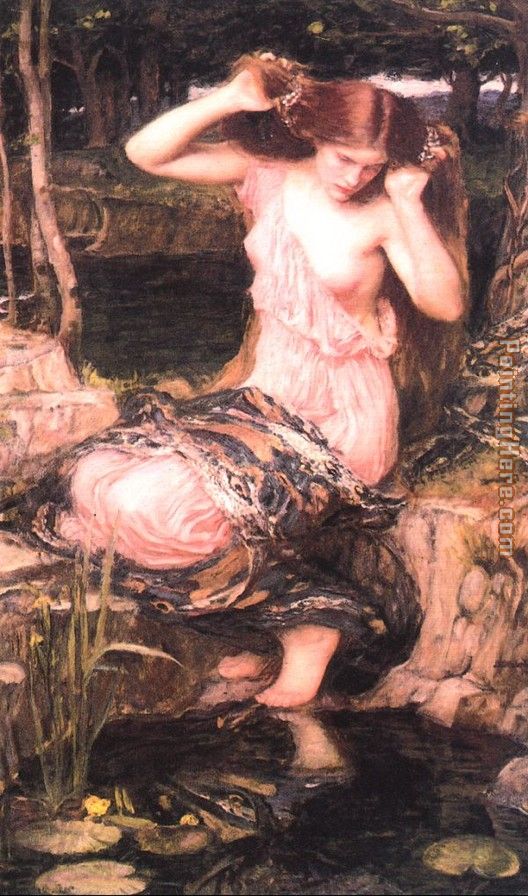
as if inside our skulls, instead of the brain, we felt a fish, floating, attracted by the Moon.

Thursday, December 16, 2010

AAAAAhhhhhhhhhh

ahhhhhhh = a sigh
aaaahhhhhhh = stress
AAAHHHHHHHH = a scream
AAAAAhhhhhhhhhh = the baritone of a singing quartet


Anyway,

I wanted to make a *~BLOG POST~* (`・ω・´)~
because I got an incredibly high-detail MRI scan of my brain from TMS lab at Beth Israel in Boston. I'm participating in a study for them (Jack and his father were my in, obviously) and they need a pretty darn detailed 3D image of a brain if they're going to do TMS on someone.

So they gave me a copy on disc, and I downloaded some freeware application that reads this kind of file. It's awesome. Great for studying the brain for my anatomy final, too. And because they only did it for a good picture of my brain, it means it flesh renders to this:


Hahahahahahahaha
You can so tell that I was blinking.


it's a fully-rotatable and transverse-through-able picture of my head cut off just below the level of the hard palate.


Also, even better, is noticing that my face is all smushed up from the padding they put around my head to keep me still!


I had two square cushions pushing into the sides of my head (see the ears/cheeks?) and a plastic bar touching my nose ever so slightly. The cheek thing is my favorite, definitely.


On to the good stuff!


There's an enormous amount of cool things to see in an MRI scan like this, but for the sake of practicality I'll just illustrate a few of my favorites.


1.


You can see the turbinate bones in my nasal cavity! The turbinate bones help warm air as it's breathed in, as well as humidify and filter. They are one of the synapomorphies of Mammalia. Woohoo!


2.


This program yet again proves its worth by including the ability to see a varying degree of averages of all the images taken. You can see the arteries in my neck! Jesus christ!


3.


This is crazy. This is about half way averaged of all the images. It's interesting to see the brain nestled comfortably into a head. Its natural habitat, and all that.


4.


Right before cutting into the eyes, the dorsal rectus muscle that moves my eye is visible, as well as some nice blood vessels.


5.


You can see the optic chiasm perfectly! Half of the signals from your left eye get sent down the left fork, and the other half goes down the right folk. Same goes for your right eye. The optic chiasm is the name for the place where they cross over.
Also, you begin to see some of the squishing effect of the pillows lol.


6.


Going a couple centimeters deeper, it's those arteries we saw before coming up from either side of my spinal cord and snaking between my cerebrum and cerebellum. I'm assuming they're the carodids, but I don't know the human circulatory system as well as I do the shark...


I wish there was a way to turn it all into a gif animation, but I don't know how I'd even begin. Oh well.


EDIT: I just figured out you can do 3D multilayer volume rendering!! Check out my cheek fat! Hahahahaha


-------------------------------------------------
Day 20 — A hobby of yours


This totally counts as a hobby.

Friday, August 13, 2010

XXXO

I haven't posted in quite a while. Losing steam, perhaps.
I suppose that because all I do is read Reddit I've run out of downtime to ponder and kill time with a blog. I'm so sorry, legions of fans who read my blog religiously (there are so many!!!!!! I swear!!!!!!).


lol.


There's been discussion of me getting a tattoo in the past, and I'm still thinking about it.
I've added shoulder tattoo to the list of places I'd possibly get one done. I have rather round/wide shoulders, which I think would do well as tattoo perches. Also, I think that I'm not really the kind of person who could pull off a tramp stamp. There are only a handful of those rare individuals who look good with them. I'd rather not risk it. However, I think I would do well with a shoulder tattoo.

Placement example. I would not get this of course, it was just the easiest thing to stamp onto a photo quickly. I still like the wolf skull idea. Perhaps a wolf skull with some adornments on my right shoulder? Left shoulder? Don't know yet. Hmmm...


-------------------------


Day 19 — A talent of yours

mmMMMMMMMMmmmm... B-)

Friday, July 23, 2010

Day 18 — Whatever tickles your fancy

I hate all this fancy tickling going on in this list... :C


Using my usual method of googling "whatever tickles your fancy":


This totally tickles my fancy.

Thursday, July 22, 2010

Lamia

Ahh! I was just going through my monster project from comp lit and couldn't find this story on here! Did I forget it?
This is the Lamia story from my comp lit class...

+ + + + + + + + + + + ++++++++++++++++++ + + + + + + + + + + + + + +


For three weeks Adam had seen the ghost lingering in the back corner of his closet. She wasn’t a particularly threatening ghost, but still Adam would call his parents every night to come upstairs and tuck him in and turn on the nightlight.

“Adam, you’re a big boy now, aren’t you? Does my big first grader really need me doing this every night?” his mother would coo before kissing him goodnight. Adam would shrug and try not to look at the closet door.

Around midnight the door would slowly creak open, sometimes waking Adam up. On the nights it did, he would glance over at the source of the noise to see a woman hunched in the closet. She was fairly young, with long, tangled hair. Adam couldn’t tell much else about her, because she was always balled up into a fetal position and rocking back and forth. Adam was torn between being afraid and pitying her. She was obviously distressed, but he was too scared of the ghost and he didn’t dare approach or try talking to her.

After almost a month of this, Adam awoke to a new sight. The ghost was no longer in his closet. Instead, she was sitting in the shadow between the closet and the dresser, much closer to his bed, still rocking back and forth rhythmically. Adam barely managed to keep from crying out. He shut his eyes as tightly as possible, willing himself to sleep.

Adam hadn’t been able to sleep, and while his mother was pouring the orange juice he nodded off at the breakfast table. Annoyed, his father looked up the newspaper—he’d been reading an article about the bloody murder of a local high school girl driving home from a concert—and raised an eyebrow. His mother was furious. She knew “the ghost lady” keeping him awake all night was just another way of saying “playing videogames.” Adam was sent to bed early that night to prove a point, and locked in his room to prevent him from sneaking back downstairs to his Playstation.

Adam was petrified. He mimed sleep for a couple hours, and when the soft creak of the closet door pierced the silence, he opened his eyes. Adam didn’t even have time to scream before a soft, cold something covered his mouth. The woman was kneeling beside his bed, hand over his mouth, other hand brought in a hush motion to her lips. She was very beautiful. Her tangled hair fell in mossy curtains around his face and he saw that she was crying.

“Why are you crying?” he whispered when she lifted her hand. “Are you sad?”

She said nothing; she opened her mouth, moving her lips in what appeared to be the motions of speech, though she made no sounds. She closed her mouth, shaking her head. She continued to cry, dripping fat clammy tears onto Adam’s cheeks. She bent forward, kissing his forehead.

“You don’t have to be sad,” he whispered, “I’ll be your friend. You seem like a nice ghost. Let’s be friends.”

She only cried harder, bending down to kiss his cheek and then his neck. Adam turned slightly to look at her. She raised her head from his neck and he saw his own blood spilling from her mouth, running down her face. Adam screamed once and then the house was silent.

rawr


I've not been very good about posting lately, so here's this.


-----------------------

Day 17 — An art piece (painting, drawing, sculpture, etc.)


Drawn on my folder during Autreat.
(If it's too illegible, those are the lyrics to Light My Fire...)

Saturday, July 3, 2010

Autreat, Autism Speaks, Blah blah blah

Disclaimer: This is a really long entry. Sorry.


So I just returned from Autreat, a sort of "autistic retreat."

I met plenty of interesting people and promptly forgot their names.
One of the many things I observed were the apparently stark differences between myself and those with more pronounced symptoms (I would say "low functioning," but I've learned that many regard that as an offensive term). What was curious about that aspect of my time there was that I can see myself so clearly in these individuals.

As I explained to Steve Silberman of Wired magazine, to an outside observer, it would appear that someone like me is very different from those further along the spectrum. I pride myself in my ability to the imitate speech tone and inflection, body posture, gesticulation and facial expressions of "neuro-typicals" (though I hate that term; no one is truly "NT" in my opinion), whereas many people at Autreat were much more noticeably autistic. Lack of tone variation, expression, coordinated motion, etc combined with what is referred to as "stimming" and verbal tics make many autistics stand out from the crowd, so to speak.
This is the reason people like me (high functioning autistics, aspergians, or whatever term you want to use) often go undiagnosed.

However, autism really is a spectrum deal. Many of the traits that are thought of as classic "low-functioning" autism are traits that I share, just to a lesser extent. I "stim" quite a bit, though I save the obvious stuff for when I'm alone (bathroom breaks, red lights, etc). Anyone who's spent time around me knows that I can't help cracking my knuckles, playing with my hands, rubbing my palms up and down my thighs as though I'm cold, squinting my eyes tightly and blowing air out my nose. These aren't nearly as odd as hand flapping, hence the necessary bathroom breaks. The squeaky wheel gets the grease, and public hand flapping, or spontaneous moaning and squeaking noises warrant attention.

And even though I am able to imitate inflection and expression, there's a substantial difference between my communication and the communication of someone who the autistic community would call an "NT." I didn't even fully recognize this myself until attending Autreat and seeing the few NTs amongst those with ASD. The difference is astonishing.

There's a sort of flow that accompanies NT speech that even the most practiced autistic seems to lack. Voice, facial expression, body posture and gesticulation are all smoothly integrated, and seemingly as unconscious as coughing when food gets caught in the wrong pipe. Watching two NTs having a conversation is like watching a well acted film, or like music. There's a noticeable rhythm, an ebb and flow, that can't be faked. There are no breaks in the conversation, at least not the kind that accompany an autistic conversation; there are no hesitations to calculate cause and effect of an action. It's really quite amazing to watch.

The closest comparison I can think of is learning Latin. Imagine learning Latin in high school; learning to translate, memorizing roots and vocabulary, guessing at pronunciation. Then the high school Latin students are transported back in time to ancient Rome for a day. Would they be able to communicate with the Romans? Probably. Would they be able to communicate like the Romans do? Probably not. The might be able to understand a conversation, or at least the literal translation, but they would have a hard time creating a natural, native-sounding response.

I know that body language and facial expression, etc, are all obvious parts in communication, but I'm using only language here because I feel that language is a larger part of communication.
I've read over and over that non-verbal cues are "98% of communication," but personally I think that's bunk. If that were the case, deaf people wouldn't need sign language, and Ariel would have been able to woo Prince Eric no problem. Perhaps it's just because I don't even think about others' non-verbal cues, so I don't consider them essential. Perhaps it's because I'd like to think that I'm not only picking up on 2% of what people are saying to me. Though I do think that even the most charismatic, well adjusted "NT" would disagree with the 98% thing; it's probably closer to 30%.


I also learned that a large portion of the autistic community absolutely hates Autism Speaks. I understand their reasoning; Autism Speaks' method of raising donation money is to play off the pity of NTs outside the autistic community. They put much weight on a "cure" for autism, and even the front page of their site reads, "Autism prevalence figures are growing. We need answers," as though autism is some sort of infectious problem or a disease.

Autism isn't a disease. People think of it this way because it is called a syndrome, but a syndrome is "a pattern of symptoms that characterize or indicate a particular condition." It doesn't have anything to do with whether a thing is a problem or not, it's just a collection of traits shared by a group that can be named.

Autism probably can't be cured, and if it can, it shouldn't be. It would be like curing men of being male, or curing people who like high-fructose corn syrup. It's not like depression, which has only a handful of causes and a handful of effected areas. Autism effects so many parts of the brain that, to quote a classic autism slogan I'm fond of, it's not a processing error, it's a different operating system.

However, this doesn't mean that we should cease all research into autism treatment (TMS, for example). "Treatment" and "cure" are very different things. A treatment wouldn't get rid of autism, it would simply help ease some of the problematic symptoms. I can understand the autistics who take pride in their identity, but autism isn't quite like homosexuality. If you asked a gay man if he wanted treatment, he would probably ask, "for what?" If you asked an autistic if he wanted treatment for, say, sensory issues, he would probably accept. I for one wouldn't mind no longer being terrified of and made sick to my stomach by loud noises, or being blinded by normal daylight. I'm sure non-verbal autistics would love to be able to communicate. Many autistics are labeled as "retarded" despite being incredibly intelligent, simply because they have trouble communicating. If you know me, you know I'm pretty clearly verbal, but it would be very nice to figure out how to ease whatever block sometimes exists between my thoughts and my speech. I can't imagine struggling with that daily.

I think that demonizing Autism Speaks is a bad move. What we should be doing instead of protesting them is talking with them. The majority of their staff aren't autistic; they have autistic family members, but it's very different from living it. As long as Autism Speaks uses pity to raise funds, they are going to be hated by many autistics. All they need to do is change their advertising campaign. Autism Speaks is a huge organization, and throwing away a valuable resource like that without trying to cooperate is simply immature and reckless.


-------------------------------------------
Day 16 — A song that makes you cry (or nearly)


Hard to Concentrate - Red Hot Chili Peppers

Hustle Bustle
And so much muscle
Our cells about to separate
Now I find it hard to concentrate
And temporary, this cash and carry
I’m stepping up to indicate
The time has come to deviate and

All I want is for you to be happy
And take this moment to make you my family
And finally you have found something perfect
And finally you have found…

Death defying, this mess I’m buying
It’s raining down with love and hate
Now I find it hard to motivate
And estuary is blessed but scary
Our hearts about to palpitate
And I’m not about to hesitate

And want to treasure the rest of your days here
And give you pleasure in so many ways, dear
And finally you have found something perfect
And finally you have found…
Here we go.

Do you want me to show up for duty?
And serve this woman and honor her beauty?
And finally you have found something perfect
And finally you have found
Yourself
With me...
Will you agree to take this man into your world?
And now we are
As one.

My lone ranger,
The heat exchanger
Is living in this figure 8
Now I’ll do my best to recreate.
And Sweet precision.
And soft collision
Our hearts about to palpitate
Now I find it hard to separate.

And all I want is for you to be happy
And take this woman and make you my family
And finally you have found someone perfect
And finally you have found

All I want is for you to be happy
And take this woman and make you my family
And finally you have found someone perfect
And finally you have found…
Yourself.

Friday, June 11, 2010

Autism: the battle of official vs. unofficial diagnoses, and other such things


Disclaimer: I hate talking about this so plainly, because of reasons I will address further down, but I feel like I should. And this is a blog, so even if people have reactions I don't like, I don't have to deal with them in person. Yay internet.


As many people already know, I have Asperger's syndrome (or, as I like to call it, ass burgers). The latest edition of the DSM, coming out in 2013, I believe, is going to remove Asperger's as a seperate condition, and lump it together with autism. I don't really have as much of a problem with this as a lot of other people in the autistic community do. I guess it's because I'm not offended by the thought of being autistic, because Asperger's is, after all, a form of autism. Also, I think Hans Asperger had a really unfortunate name. Really, the word Asperger's just screams "retard."
So, depending on which DSM you're following, I either have Asperger's or I have high functioning autism. Take your pick.

I don't have an official diagnosis. I've been to two therapists as well as my primary care physician, none of whom were qualified to diagnose autism. Very frustrating.
Though I have no doubt that I am autistic. I know it is common knowledge that autism is a spectrum disorder, but I don't think the layman really understands what that means. I'll admit that even I was always under the impression that autism was a debilitating disease, made famous by its drooling, blank eyed poster children who don't speak until they're six years old. Asperger's has an even worse rap; the only famous aspergians (by famous I mean famous outside of the autistic community) are people like Chris W Chandler (who, personally, I think is lower functioning than your average aspie). Where autism means a silent, creepy child who never makes a sound other than the all-too-common unprovoked temper tantrum, Asperger's means a crazy permanent-virgin who lives in his mother's basement and collects Star Wars action figures.
Autism is much more than both of those definitions.

I think that "spectrum" doesn't even fully explain how autism works, though it is easier to explain. The simplest way of explaining the spectrum is that, on the far end you have the drooling, child-like 16 year old who can't be touched without screaming. On the opposite end you have the awkward dork who watches way too much Doctor Who and tries to make friends by spouting Doctor Who references.
When I say that "spectrum" is not accurate, I mean that what would be more accurate is a spider diagram. If you don't know what a spider diagram is, here is my diagram result for the Aspie-quiz (lame title, but it's pretty agreed upon to be one of the better online quizzes).
A spider diagram is pretty intuitive, so I won't explain how to read it. But when I say that autism is not a spectrum, and is instead a spider diagram, what I mean is that everyone has different areas in which they are low and high functioning.

For example, I'm much better than Jack at mimicking voice tone, inflection and body language, so I tend to do a better job of "passing for normal." However, I'm much worse on the whole "black and white thinking" aspect of autism. When someone is mad, they must be mad at me. When someone is upset with me, they must hate me; there is no in between emotion, everyone either likes me or hates me. Etc, etc.

There are plenty of people out there who are clinically, "more autistic" than I am, but are better at some things. It's not as though a person is, say, in the 80th percentile for making friends, so they must be in the 80th percentile for every other symptom of autism. I've talked to adults with autism who are seemingly completely "normal" except for the fact that every few hours they take a break to run to the bathroom and scream for a few minutes. I could go on forever, in case you can't tell.

What really bothers me is that the first thing everyone always asks me is why I want a diagnosis. Usually it'll be somewhere along the lines of, "Do you need it for court or something? Or for special needs in school?" No. I don't "need" a diagnosis.
I've tried replying, "If it were you, wouldn't you want to know?" but it never has the intended effect. Everyone seems to think that self diagnosis is enough, and I should be confident in my abilities to know myself.
I am confident. I know I am on the spectrum, but the thing is, I can't tell people I have Asperger's. I could never write a book about it, or be a public speaker for a college or committee, or have any sort of authority behind my claim. People will forever think that I'm a hypochondriac who's using autism as an "excuse" for who knows what, unless of course I can get a goddamn doctor to say it for me.

For example, here is the list of criteria for Asperger's Syndrome, according to the DSM IV:

A.Qualitative impairment in social interaction, as manifested by at least two of the following:

(1) marked impairment in the use of multiple nonverbal behaviors such as eye-to-eye gaze, facial expression, body postures, and gestures to regulate social interaction.

(Anyone who's known me for longer than two or three years will understand when I say that, before I was taught how to pose my body and be aware of my face, this was me to a tee. When talking with someone, I never moved my hands at all, or any of my body for that matter. I sat hunched over with my hands in my lap, fidgeting, not looking at anyone, and keeping up a monologue instead of a conversation with little to no vocal inflection. I still am like this, unless of course I feel the need to make a good impression on someone, or if I'm trying to seem "normal.")
(2) failure to develop peer relationships appropriate to developmental level.
(I remember in Kindergarten, there was a girl in my class I didn't get along with. The teacher called our moms and told them to make us be friends, so my mom said I had to be nice to her. I had no idea how to be nice to someone, so I brought her presents. She didn't react well, probably because the presents were things like a really round acorn I found at the bus stop that I thought was cool. I still have a hard time making friends. There's a sort of flow and rhythm to normal conversation that I can observe, but am still unable to imitate.)
(3) a lack of spontaneous seeking to share enjoyment, interests, or achievements with other people (e.g., by a lack of showing, bringing, or pointing out objects of interest to other people)
(I still don't understand this. I don't think I've ever met someone with Asperger's who hasn't been aching to show off their newest whatchamacall it.)
(4) lack of social or emotional reciprocity
(I've gotten pretty good at keeping this inside, so this is something I usually only feel in my head, unless I'm tired. It's hard to explain, so I'll provide the example that when somebody's grandma dies, I honestly don't give a shit. If it's a close friend, I care, but not because of the grandma, because my friend who I care about is sad. The not caring is sometimes bad because I'll forget about the dead grandma and a month later make some really awkward dead-grandma joke that will offend everyone in the room.)

B.Restricted repetitive and stereotyped patterns of behavior, interests, and activities, as manifested by at least one of the following:

(1) encompassing preoccupation with one or more stereotyped and restricted patterns of interest that is abnormal either in intensity or focus.
(Anyone who knew me in elementary school: animals, dragons and wolves should ring a bell. Right now it's physiology, pathology and death. It's a big misconception that autistic people have only one obsession at a time. No one dedicates their life to just one thing forever, it's phases.)
(2) apparently inflexible adherence to specific, nonfunctional routines or rituals.
(This is why I hate the shower. If I take a shower, there's a long to-do list that goes with it. If I don't have more than 20 minutes, I usually just won't take a shower, because I can't deal with not being able to do the rest of my list. This is also why I don't like spontaneous plans, unless it's a spontaneous plan I've done before [ie: swimming at puffers out of the blue is ok, because I've done it before. Hopping the train to NYC would be terrifying]. This is also why I don't like unexpected guests.)
(3) stereotyped and repetitive motor mannerisms (e.g., hand or finger flapping or twisting, or complex whole-body movements)
(Thankfully, I stopped doing this in public in about 6th grade. If you knew me in elementary school, do you remember how I would wave my fingers in front of my face? Yeah. Awkward.)
(4) persistent preoccupation with parts of objects
(An example of something I thought was normal. Do other people really not love gears and bolts and pieces of machinery? How could you not! AH!)

C.The disturbance causes clinically significant impairment in social, occupational, or other important areas of functioning.

D.There is no clinically significant general delay in language (e.g., single words used by age 2 years, communicative phrases used by age 3 years).
(This is the main difference between Asperger's and autism. Autism is marked by a delay in speech. Though, again, some aspies have delayed speech, and some with autism are early talkers. Usually they say either early talking or late talking can both be signs of autism.)

E.There is no clinically significant delay in cognitive development or in the development of age-appropriate self-help skills, adaptive behavior (other than in social interaction), and curiosity about the environment in childhood.

F.Criteria are not met for another specific Pervasive Developmental Disorder or Schizophrenia.
(It fascinates me that schizotypical disorder is often misdiagnosed as autism or Asperger's. They're very similar, except for a few differences. The most obvious difference, in my opinion at least, is that where autism is marked by a very logical, scientific thought process, to the point of often squashing religious beliefs, schizotypical disorder is marked by the opposite. "Magical thinking," says the DSM. These are the people who see a coincidence and believe it to have meaning in their lives, people who sense changes in energy waves, etc etc. That sort of thing.)


I hate that a doctor needs to agree with a person to make a diagnosis official. I suppose I understand why that's true; it's very important. But it's frustrating. I'm somewhat of an outsider in the autistic community, as there's a large group who believe that those who are self diagnosed "aren't really autistic."
These, of course, are the people who were diagnosed as children because of their watchful parents. People like me, with parents who say, "Oh, yep, my child is very textbook autistic. Oh well, it's cute," never get diagnosed.

Getting a diagnosis is not about... well, whatever the hell it is that people seem to think it's about... it's about knowing for certain, and confirmation. If, for your whole life, you felt something was wrong with you, and people constantly made fun of you because of this mysterious something-wrong, and one day you learn that there's a reason you are like this, wouldn't you want to know? Because if there's a reason, it means there's not something wrong with you. You're not just as normal as every body else, and for some reason you're broken, you just can't do it. It's not your fault.
I remember what was always hardest for me to deal with was the thought that I was normal. I have the same brain as everybody else, the same potential, so why can't I explain myself? Why can't I talk to people? Why do I act like this? I'm not supposed to be this way, why can't I fix it?
Learning that there's no way to fix it, that it's not something I'm doing wrong, it's just the way I am, was unbelievably wonderful. I'd gone through so many break downs and so much insanity because I thought I was just doing something wrong.
This doesn't mean autism is an excuse to be offensive. There's a very big difference between something fixable, and something that can be dealt with. I'd spent my whole life trying to fix myself, when this isn't something that can be fixed. I can compensate for it, but I shouldn't feel bad when I can't change who I am inside.

If you were in a position like this, wouldn't you want someone to agree with you, to tell you you're not crazy?
And yet no one seems to understand why I want a diagnosis so badly.


-----------------------------------

(ps) Day 15 — A fanfic

What the fuck. I don't know.
Once upon a time Ron and Hermione had sex and got married, in that order. Harry died in a tragic car accident. No one cared very much.
-the end-